Table Of Content

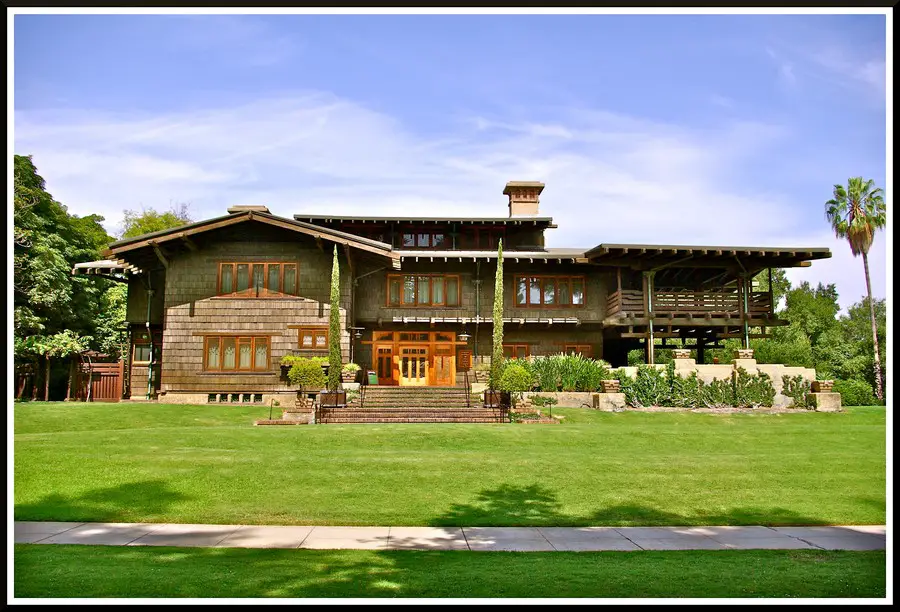
Constructed in 1908–1909 as a home for David B. Gamble, son of the Procter & Gamble founder James Gamble, it is today a National Historic Landmark, a California Historical Landmark, and open to the public for tours and events. Adhering to a curatorial philosophy rooted in the first principle that The Gamble House Conservancy exists primarily to conserve and interpret the work of architects Charles and Henry Greene as represented by The Gamble House. Conservation, interpretation and acquisitions shall prioritize the period of significance represented by the patronage of the Gamble family and the design production of architects Charles and Henry Greene between 1907 and 1916. Objects accessioned into the collection subsequent to the original 1966 gift shall be treated with the same level of care and ethical consideration as the balance of the collection. No gift shall be accepted that is not directly relevant to the interpretation of The Gamble House, architects Greene & Greene, the Gamble family, or the American Arts & Crafts movement.
Take a video tour through Pasadena’s iconic Gamble House
However, their father and grander ideas, and suggested they become architects, which is when the brothers enrolled in the School of Architecture at Massachusetts Institute of Technology. Even though both brothers had found work at architecture firms, by 1893 their parents requested the boys move to California. The brothers agreed, but stopped at the World’s Columbian Exhibition in Chicago, a stop that would influence their design for the remainder of their careers, and play a role in California’s design heritage. It was here that the brothers first gazed upon Japanese architecture, and what an impact it made. Upon arriving in Pasadena, the brothers founded their own firm, Greene & Greene, creating fine and artistic examples of Craftsman style architecture, all with heavy influences of Japan. Various elements throughout the Gamble House reflect Japanese architecture and design.
Hand-carved Wood Details
Pasadena's Gamble House opens up servants quarters to public (Photos) - LAist
Pasadena's Gamble House opens up servants quarters to public (Photos).
Posted: Sat, 16 Mar 2024 16:18:50 GMT [source]
SAH Archipedia tells the story of the United States through its buildings, landscapes, and cities. This freely available resource empowers the public with authoritative knowledge that deepens their understanding and appreciation of the built environment. The Gamble House in Pasadena, California, is an outstanding example of American Arts and Crafts-style architecture.
The Gamble House – Pasadena’s Craftsman Masterpiece
Werk Road Property: Plans set for new park at James N. Gamble estate - The Cincinnati Enquirer
Werk Road Property: Plans set for new park at James N. Gamble estate.
Posted: Sun, 21 Jan 2024 08:00:00 GMT [source]
The Gamble House, designed by Charles and Henry Greene, is regarded as one of the finest examples of Craftsman architecture in the United States, employing architecture as fine art. Over one century later, our country is experiencing a revitalization of the Craftsman movement. We find a renewed interest in handcrafted details, warm colors, and nature-inspired elements in the Craft Revival style trending for 2022. So, it only seems appropriate to go back and analyze one of the most popular homes constructed in the style. In our Gamble House architectural case study, our team of Austin architects reviews the history of the home, the influences of the Greene brothers, as well as the materials and design elements used in construction.
Along with precise joinery throughout the entire home, our docent tour guides pointed out multiple other influences including overhanging eaves, darkened mortars, and scarf joints. The most prominent motif that's repeated in groups of three is the Suba, a Japanese design that references the protective plate between the blade and handle of a samurai sword. The essential nature of architecture by Greene & Greene begins with intense attention to detail and craftsmanship, as their bungalows mark the height of the American Arts and Crafts style. The brothers were inspired by the concept of total design, or gesamtkunstwerk, which was stressed in the German-designed rooms at the 1904 Louisiana Purchase International Exposition in St. Louis. When they met David and Mary Gamble, they already had developed a list of rich couples who commissioned them to design their houses, with generous budgets and relatively free reign.
Specialty Tours
Meanwhile the garage used in the 1985 sequences was a facade built on location next to the Burger King seen in the film, and built in Burbank. Pasadena, with its deep roots in history, culture, architecture and science is home to several museums and educational... "An architect is a builder employing the process of art," Charles Greene once wrote. This is proven to be their governing belief, not only in the final product but also throughout the process. The brothers were known to veer from the initial blueprints, showing that they were enthralled with transition and process, the blueprints as a point of departure rather than a set of instructions. Exterior porches are found off three of the second-floor bedrooms and were used for sleeping or entertaining.
Gamble House tours (one-hour tours, specialty and group) are offered on Tuesdays, and Thursdays through Sundays. Please click HERE for photography and film reservations (fees apply) and policies. The third floor was planned as a billiard room but was used as an attic by the Gamble family.

Gardens & Gables: Exploring the Gamble House Outdoors
This dining space reveals a smooth, velvety glow that permeates the space, which is created by a lack of direct lighting. Shown here is one of the living spaces that’s filled with intricate woodworking and handcrafted furniture. The various spaces of the house are separated by different wood patterns on the floor.
At that point, Karla raised her hand and let Nancy know that she could help provide an appropriately sized, correct period icebox for their cold room. Karla was then connected with the Executive Director, Ted Bosely, and other Gamble House staff, to start the conversation about the icebox. During her tour, she mentioned that the icebox in the cold room was too small for the house. Nancy asked if that if anyone came across a larger icebox to please contact the Gamble House and let them know. In 1985, the home gained worldwide notoriety as Emmett "Doc" Brown’s house in Back to the Future. While the Greene brother’s design wasn’t initially popular, it is now cemented as a cultural icon.
The Gamble House represented an American-style which sat amidst an abundance of imitations and interpretations of classical European buildings, the influence for many mansions at the time. It was designed to be very suitable for the southern California climate, with a sleeping porch and beautiful transition spaces from the inside to outdoor patios, a garden and a pond. The design details throughout are clearly influenced by Japanese architecture, which they first became enamored with during a cross country trip. While making their way from Ohio to Pasadena, they first experienced it when they stopped by the World’s Columbian Exhibition in Chicago—also known as the Chicago World’s Fair—and visited the Ho-o-den Japanese Pavilion. The house is filled with repeated motifs that are regularly found in traditional Japanese design.
While most Craftsman bungalows constructed at the time were small, the Greene brothers expanded on the traditional floor plan to create an “ultimate bungalow” that evokes a sense of grandeur while remaining grounded. Eventually, Cecil and Louise decided they didn’t need such a large house, and put it on the market. A couple came by the house to look at the house, and the husband lamented about how dark it was inside, and the wife replied that they would just paint everything white. Horrified, Cecil and Louise promptly told them the house was no longer for sale, and continued to live in the home.
In 1907 they decided to build a permanent home in their adopted hometown, and hired the firm of Greene and Greene to design the home. The Greene brothers were known for their Ultimate Bungalows (think supersized Craftsman homes) which were heavily influenced by traditional Japanese architecture, and the Gamble House is without a doubt the finest example of their work. Also found throughout the house are complete collections of art tile, pottery, and art glass that were compiled by the resident family. The Greene brothers took these key pieces into consideration when designing the house, and they still exist there today.
Although the house is not as spatially adventurous as the contemporary works of Frank Lloyd Wright, or even of the earlier New England "Shingle style," its mood is casual and its symmetries tend to be localized. The Greenes used an experienced team of local contractors who had worked together for them in Pasadena on several previous homes, including the Hall brothers, Peter and John, who were responsible for the high quality of the woodworking in the house and its furniture. The Gamble family crest, a crane and trailing rose, was integrated in part or whole in many locations around the house. The Gamble House in Pasadena, California, is an outstanding example of American Arts and Crafts style architecture.
To protect the exposed structure, they started to apply a preservative, which ended up oxidizing and turned the exterior green and some of the wood black. When a team revisited the project to try and achieve its original colors, they removed the old preservative and replaced the original screens with ones made of copper. They also had to manually remove a toxic epoxy that had filled the wood in the past.
The architects worked closely with the Gambles in the design of the house, incorporating specific design elements such as the family crest among its motifs. Drawings for the house were completed in February 1908, and ground was broken in March. Ten months later, the house was finished, the first pieces of custom furniture were delivered, and The Gamble House became home to David Gamble, his wife Mary, and their youngest son Clarence. (Their oldest son Cecil was already working for Procter & Gamble; their middle son Sidney had just started at Princeton University.) Mary’s younger sister, Julia, also came to live with the family. The woods, the low and horizontal room shapes, and the natural light that filters through the art glass exterior windows coexist with a relatively traditional plan, in which most rooms are regularly shaped and organized around a central hall.


No comments:
Post a Comment